Spider plant pale leaves: causes, diagnosis, and recovery
Pale spider plant leaves can come from excess sun, low light, root stress, or a lack of nutrients. Compare the fading with the plant's normal stripes, then check where the damage appears and whether the soil is wet or dry.
Check first
Direct sun on the pale side
Check before feeding
Light and roots can also cause pale leaves
Best signal
Greener, sturdier new growth
Diagnose in this order
- 1 Check whether the paling is strongest on the window-facing side.
- 2 Look at roots and soil before reaching for fertilizer.
- 3 Recover with brighter indirect light, not harsh sun.
- 4 Judge success by new leaves, because badly bleached tissue rarely fully rebounds.
Check the pattern of fading
Check whether fading is limited to the sun-facing side or affects new leaves across the plant.
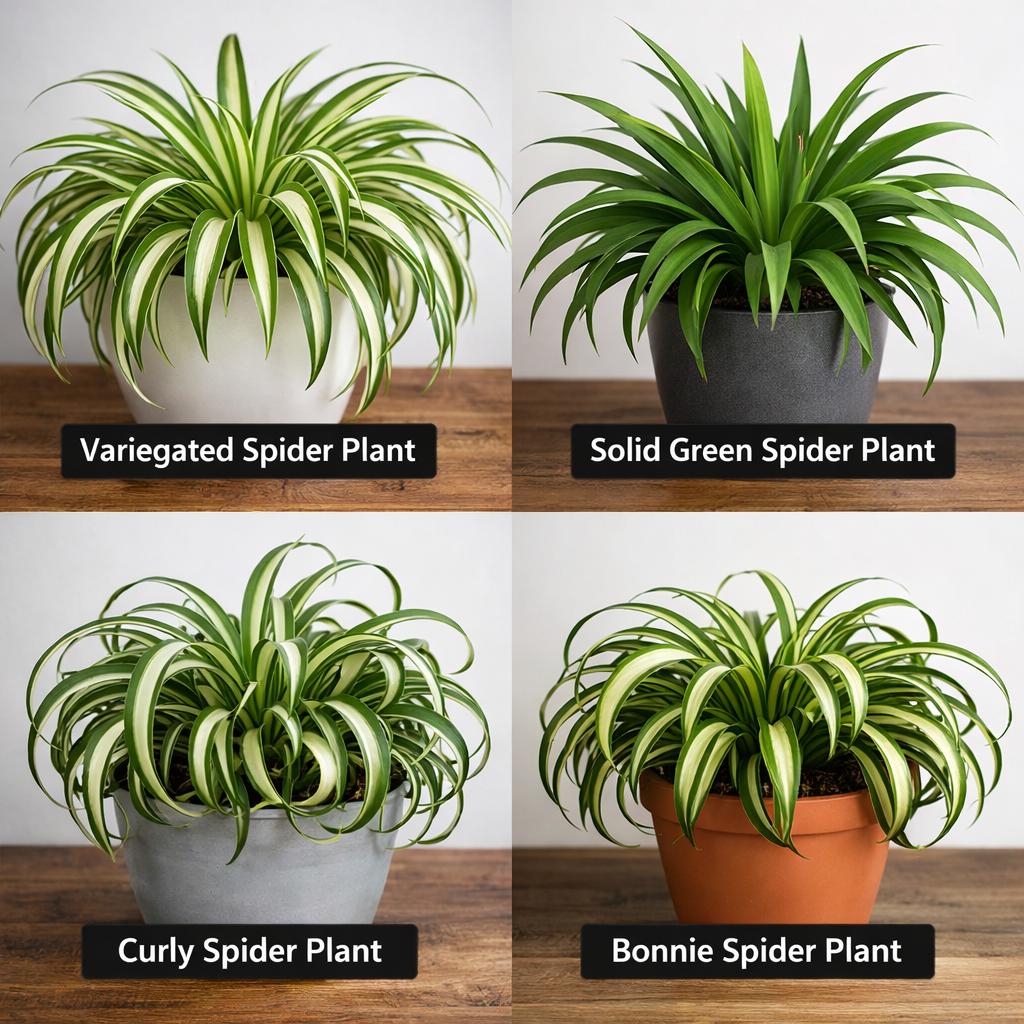
Check which side is pale
Compare the color with its normal variety.
The comparison image shows normal stripe patterns and green foliage. Use the leaf-pattern illustration below to compare a continuous stripe with a new irregular pale patch.
Directional fading
Usually points toward excess direct sun.
Pale plus wet soil
More likely a root problem than a feeding problem.
Pale leaf diagnosis table
Compare the sun-facing leaves with the rest of the plant, then check the newest leaves and root condition to narrow the cause.
| What you see | Most likely cause | Best first fix |
|---|---|---|
| Pale or bleached areas on the window-facing side | Too much direct sun | Move the plant to bright, indirect light and avoid hot afternoon rays. |
| Pale, dull foliage and dry potting mix | Underwatering | Water thoroughly, let excess water drain, and check whether the foliage firms up. |
| Overall washed-out color with weak, stretched growth | Insufficient light | Increase light gradually so new leaves grow stronger and more saturated. |
| Pale new growth in old exhausted soil | Low nutrition or rootbound plant | Refresh the mix or feed lightly during active growth after checking root health. |
| Pale leaves plus yellowing and chronically wet soil | Root stress | Check drainage and roots before adding fertilizer. |
| Only variegated sections seem brighter while green bands stay healthy | Normal variegation variation | Monitor new growth and only intervene if the whole plant is losing vigor. |
The main reasons color fades
1. direct sun bleaching
Strong sun can wash out spider plant foliage before you see obvious scorch. Variegated leaves show this faster, especially on west-facing windows.
2. low-energy growth in dim rooms
In low light, new leaves can emerge thinner and less saturated. This is different from bleaching because the whole plant often looks softer and weaker rather than scorched.
3. depleted mix or mild nutrient shortage
If a plant has been in the same pot for a long time, check for compacted soil and crowded roots. Refresh the mix when needed and feed lightly during active growth.
4. root trouble that limits uptake
If the roots are stressed by soggy soil or crowding, the leaves can look pale because the plant cannot support healthy growth efficiently.
Recovery plan
- 1. Look at where the paling appears first. Sun bleaching is usually directional, while nutrition or root issues affect the plant more broadly.
- 2. Move the plant into bright, indirect light if harsh sun is hitting the leaves directly.
- 3. Check the roots and the soil condition before assuming fertilizer is the answer.
- 4. If the plant is actively growing and roots look healthy, resume a light feeding routine instead of heavy corrective fertilizing.
- 5. Remove fully scorched leaves only after you correct the underlying cause.
- 6. Watch the next round of growth for deeper green color and better leaf substance.
How to keep color stronger over time
Light and placement
- Keep spider plants in bright indirect light.
- Use sheer filtering on hot west- or south-facing windows.
- Add a grow light if the room stays dim through winter.
Roots and feeding
- Refresh exhausted soil before increasing fertilizer strength.
- Feed lightly during active growth, not on a stressed plant.
- Keep watering even so roots stay functional but not soggy.
Why is my spider plant turning white?
A white stripe running along otherwise firm green leaves can be normal variegation. Compare the same part of several leaves and check the variety. A new pale patch spreading across previously green tissue needs a care check.
Look at the location of the change. A faded patch on the sun-facing side after moving the plant into direct sun suggests light damage. Dull foliage across a plant with dry soil suggests thirst. Pale leaves with wet soil call for a drainage and root check.
RHS notes that pale, dull spider plant foliage can indicate a need for water. Feel the mix before watering, because a wet root ball needs a different response. Water a dry pot thoroughly, let it drain, and check whether the foliage firms up before treating the color as a nutrient problem.
For example, a plant moves from a shaded shelf to a sunny window and develops a pale patch on the exposed leaves. Move it into bright, indirect light and watch the next leaves. The existing patch may remain, so new growth gives you a useful way to assess the changed position.
If the leaves instead lose their white bands and become greener, check light and variety using the varieties guide. Normal stripe patterns, bleaching, and loss of variegation are different observations.
Questions about white leaves
Are white stripes on spider plant leaves normal?
Yes, many varieties have white or cream stripes along their leaves. Look for firm green tissue around the stripe and a consistent pattern across leaves.
Why did my spider plant suddenly look pale or white?
Compare the change with its normal stripes, then check sun exposure, soil moisture, and roots. New pale patches after strong direct sun suggest light damage; dull foliage with dry soil can indicate thirst.
Related guides and fixes
Use these guides to check light, nutrition, and watering before treating pale foliage.